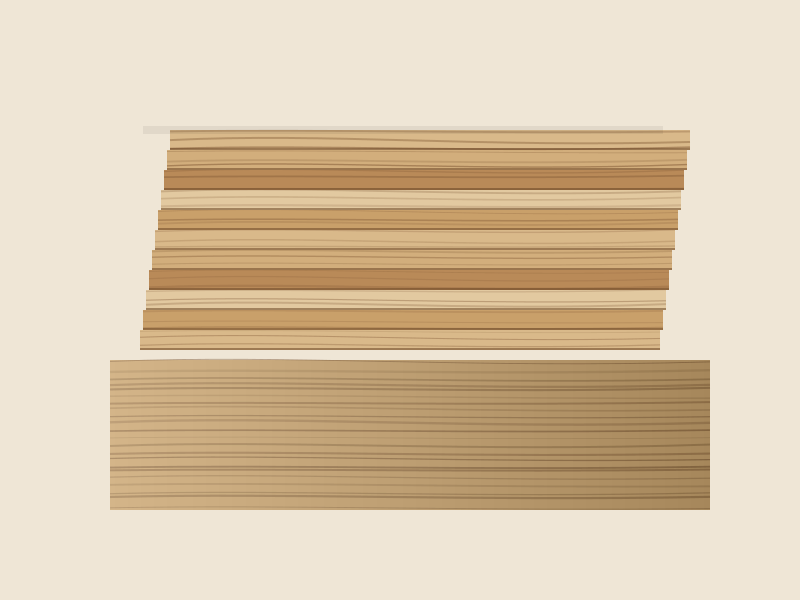
Most plywood enquiries start the same way: someone has a job in hand, a thickness in mind, and a budget, and they want to know what is available today and at what rate. This page is built to help you get to that conversation quickly, and to make it a better one.
Types of plywood we can quote
The names below overlap in the trade, so it helps to know what each one really tells you.
| Type | What it generally means | Typical use |
|---|---|---|
| Commercial plywood | A trade term for general-purpose plywood. The glue type and grade vary, so always ask which. | Furniture carcasses, partitions, hidden structure in dry areas |
| MR plywood | Moisture-resistant grade, bonded for interior, dry conditions. | Wardrobes, bed boxes, storage units away from water |
| BWR plywood | Boiling-water-resistant grade, a step up in moisture and humidity tolerance. | Kitchens, wardrobes in humid rooms, vanities |
| Marine plywood | The highest water-resistance category, made to a marine plywood standard. | Wet areas, kitchen sink units, exposed or semi-exposed use |
| Furniture plywood | Plywood chosen for furniture: flat, consistent thickness, good screw holding. | Beds, tables, cabinets, shutters |
| Interior plywood | Plywood for interior fit-out work, often in thinner sizes with a decorative-ready face. | Panelling, back panels, ceilings, partitions |
Ginie Ply: our own range
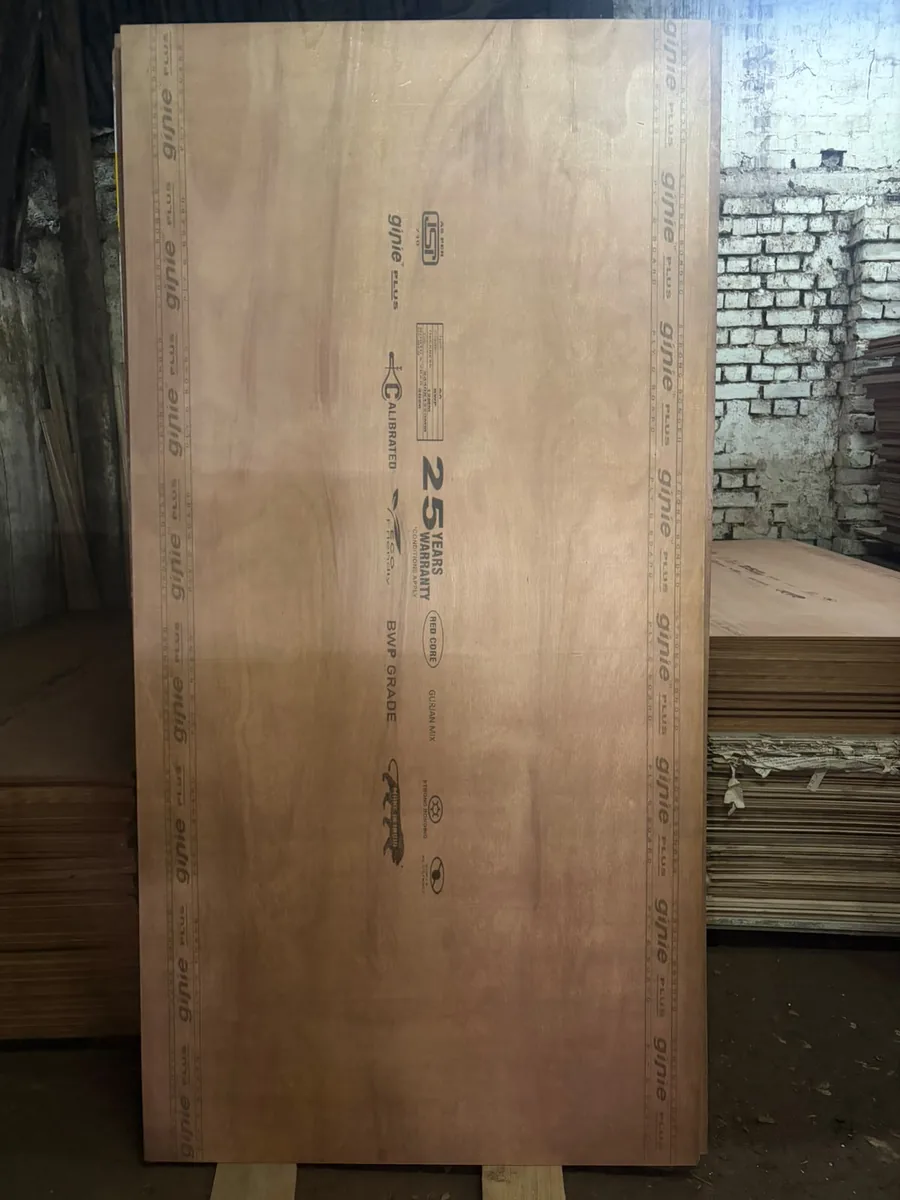
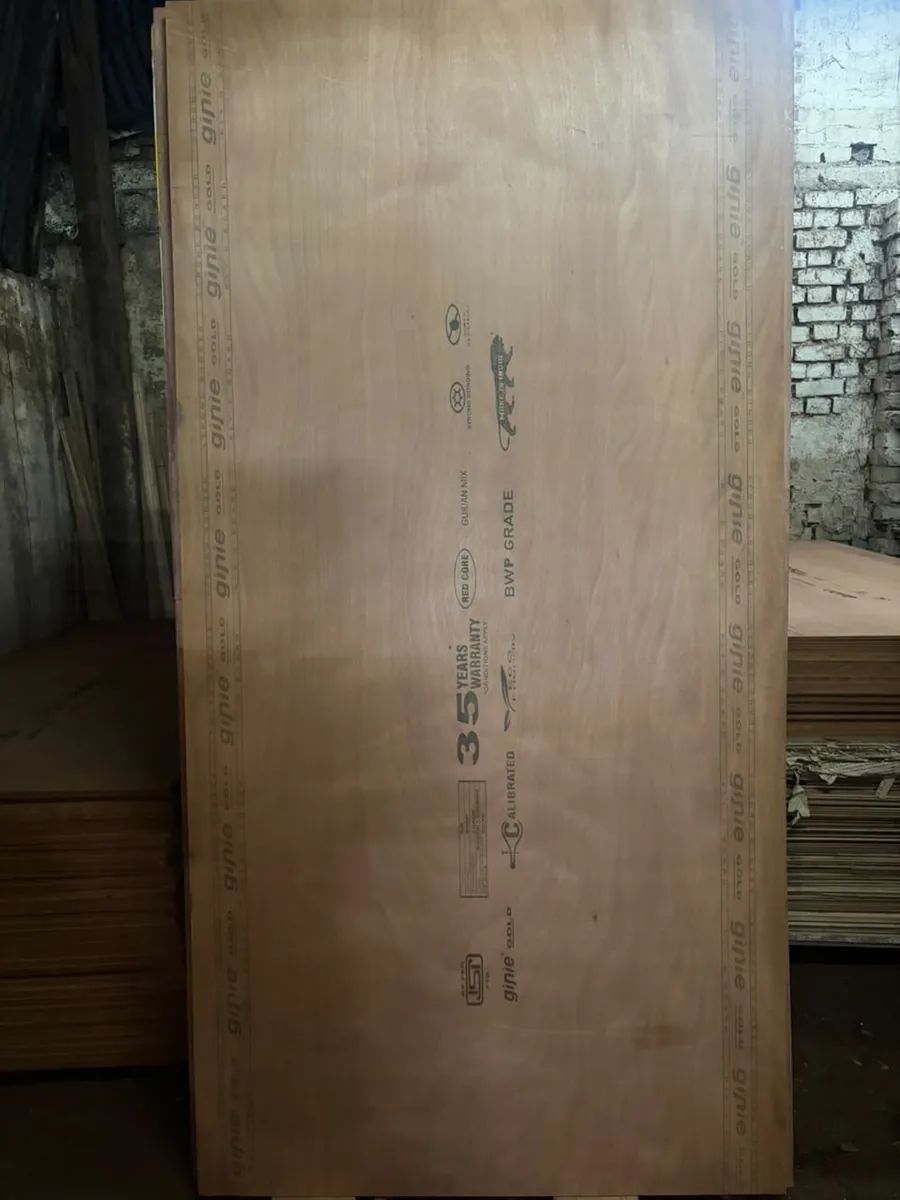
Alongside the other brands we quote, Khemka Sales sells plywood under its own name, Ginie Ply. Ginie Plus is marked BWP (IS:710) and Ginie Gold is marked Marine BWP (IS:710). Both are printed on the sheet, so you can check them when you see the board.
Which plywood for which room?
Kolkata is humid for most of the year and the monsoon is long. That matters more than most buyers expect. A wardrobe built with an MR board against an outside wall on the ground floor will often behave differently from the same wardrobe on the fifth floor of a dry flat. As a rough guide: use MR for dry interior storage, BWR for kitchens and any area near moisture, and marine plywood where there is regular contact with water. If you are unsure, tell us the room and where in the house it sits and we will suggest options.
Sizes and thickness
The most commonly used sheet is 8 x 4 ft (2440 x 1220 mm), and thickness usually ranges from around 4 mm for back panels to 18 or 19 mm for carcasses and shutters. Exact thicknesses, sizes and grades differ by brand and range, so we do not list a fixed catalogue here. Ask for what you need and we will confirm what is available. Our plywood thickness guide explains which thickness suits which part of a piece of furniture.
Who buys plywood from us
- Furniture manufacturers buying regularly in repeat quantities
- Interior designers and interior contractors working to a BOQ
- Builders and real estate developers with project requirements
- Homeowners doing a kitchen, wardrobe or furniture job
Where plywood gets used
Common jobs include furniture, modular kitchens, wardrobes, office furniture, commercial interiors and residential interiors.
Before you buy: a short checklist
- Which grade is it: MR, BWR or marine, and what standard does it carry?
- What is the actual thickness, and is it consistent across the sheet?
- Is the face veneer even, with no patches or open joints?
- Is the brand's marking printed on the sheet?
- Is the quoted rate per sheet or per sq ft, with or without GST, and with or without delivery?
Bulk and project supply
If you need a larger quantity or are working from a BOQ, send the list through the bulk and project orders page. A list with grade, thickness and quantity for each line is enough to get a proper quotation. Prefer to estimate first? Use the project material calculator.
Brands you can ask us about
Products from leading brands including the names below. Ask us which ranges and sizes are currently available.