
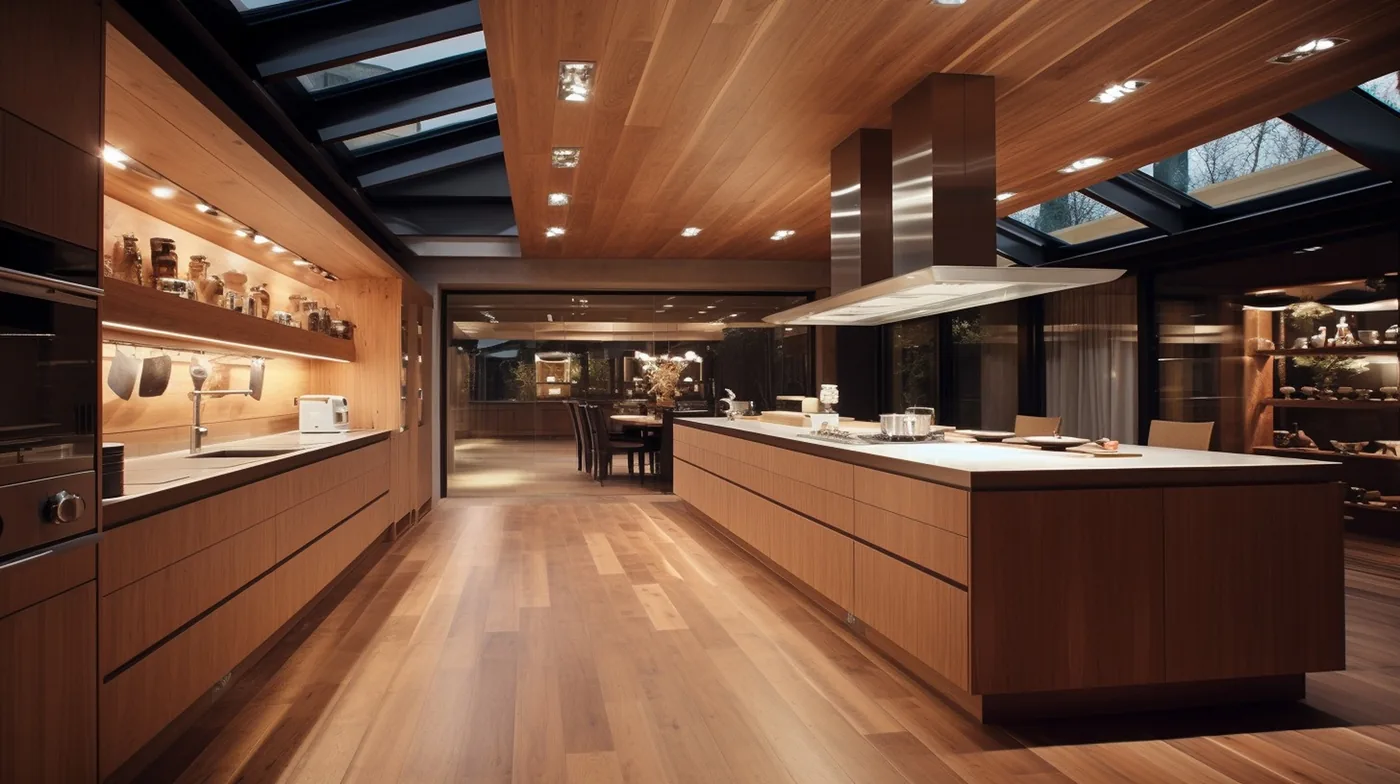
A modular kitchen is a series of boxes. Where each box sits decides how much moisture it will see, and that should decide the grade. Many kitchens use one grade throughout for simplicity. A cost-aware design uses different grades for different units.
Where moisture shows up
| Unit | Moisture risk | Common choice |
|---|---|---|
| Sink base unit | High: leaks, splashes, wet cloths | Marine, or BWR with sealed edges |
| Other base units | Medium: steam, floor washing, humidity | BWR |
| Wall units | Lower, but steam rises | BWR; MR in dry kitchens, with care |
| Tall units | Lower, but near appliances | BWR |
Edges and sealing
Most kitchen failures start at a cut edge that was left bare. Edge-band every exposed edge. Seal the sink cut-out and any holes drilled for pipes. Use water-tolerant fixings in the sink base. Protect the bottom of base units from floor washing with a plinth that stands clear of the floor.
Thickness
Carcasses are commonly 18 mm. Back panels are thinner. Check with your kitchen manufacturer. Hardware like soft-close hinges and heavy drawers expect a particular carcass thickness.
What to ask for
- Grade for each unit type
- Thickness for carcass, shelf and back panel
- Laminate design codes, and whether the inside is laminated
- Brand and range
Read best plywood for modular kitchen and laminates for kitchen cabinets. Estimate boards with the calculator.
Brands you can ask us about
Products from leading brands including the names below. Ask us which ranges and sizes are currently available.