
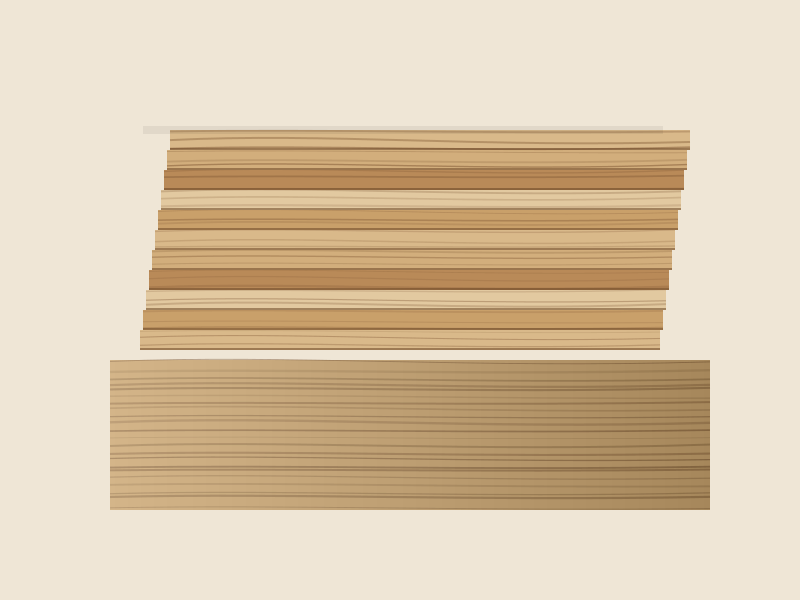
There is no single plywood grade called "furniture plywood". The phrase refers to boards that behave well when you cut, edge-band, screw and laminate them to make furniture. Whether that board is MR, BWR or marine depends on the room, so start there, then judge the board by the qualities below.
What furniture makers look for
| Quality | Why it matters in furniture |
|---|---|
| Flat sheet | A bowed board makes doors that do not close and tables that rock |
| Consistent thickness | Hinges, channels and joints assume a true 18 mm or 19 mm |
| Tight core | Gaps in the core cause chipped edges and weak screw holding |
| Smooth face | Laminate telegraphs every bump underneath |
| Screw holding | Hinge and drawer-slide screws should not pull out |
Thickness by part
As a general pattern, back panels use thin board (around 4 to 8 mm), shelves and carcass sides use 12 to 18 mm, and tabletops, bed frames and shutters often use 18 to 19 mm or thicker. See the thickness guide for how to choose by part.
Compare samples, not claims
Every supplier says their plywood is strong. A better check is physical: stand a sheet on its edge, look down the face for waviness, flex a corner gently, and look at the edge for gaps. A quality brand sheet should also carry its marking on the face.
Repeat orders
A workshop that buys every month will care about consistency from one delivery to the next, not just a good first sheet. Tell us your regular items and we can quote them as a standing list. See supply for furniture manufacturers.
Brands you can ask us about
Products from leading brands including the names below. Ask us which ranges and sizes are currently available.