
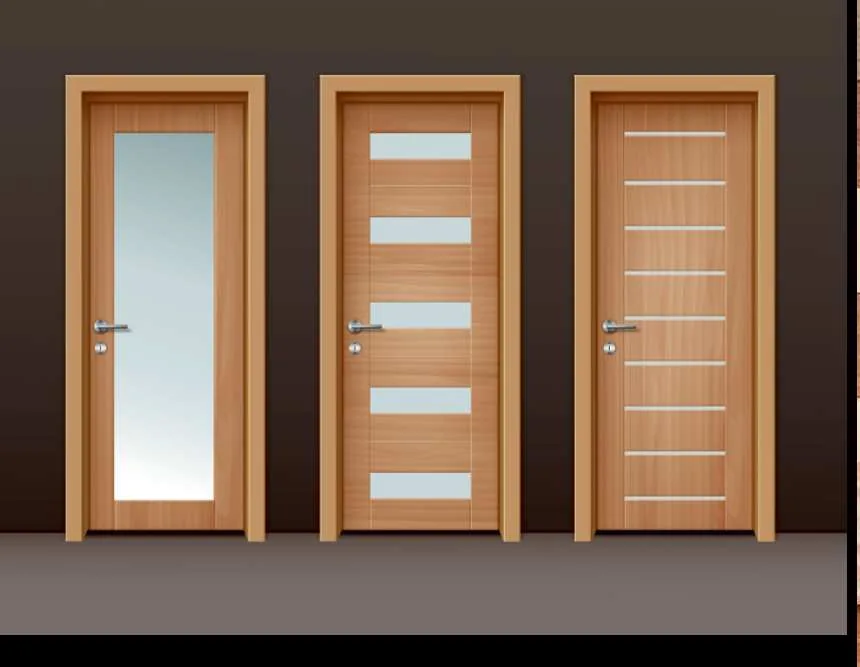
A flush door has flat faces on both sides, with a core inside and a face skin on top. It is lighter and simpler than a panelled door, and it is the usual choice for internal doors in contemporary homes and offices.
How flush doors differ
| Part | Options to ask about |
|---|---|
| Core | Different core constructions exist, such as block-board or solid-core types. Ask which one the quote is for. |
| Face | Plain ply faces for painting, or faces finished with veneer or laminate |
| Edges | Whether the edges are lipped with timber to take planing and hinges |
| Moisture performance | Needed for bathrooms and for exposed locations |
Which room?
Bedroom and office doors rarely face water, so a standard grade is usually fine. Bathroom doors need a moisture-suitable door and a proper finish on all edges, including the bottom. Entrance doors are a different decision, and often use solid timber or specialist doors.
What to tell us
- Height and width, and how many of each size
- Thickness required
- Face finish you want
- Frame details if the door is to fit an existing frame
Pair with wooden door frames, or return to doors and frames.